When the behaviour changes, the message needs to change too
Back in 2021, Sandwell Council introduced a new food waste recycling service, with Serco responsible for delivering the service and the communications around it.
Our job was to work with the in-house marketing team and help people understand what was changing, what they needed to do and, most importantly, encourage them to actually use it.
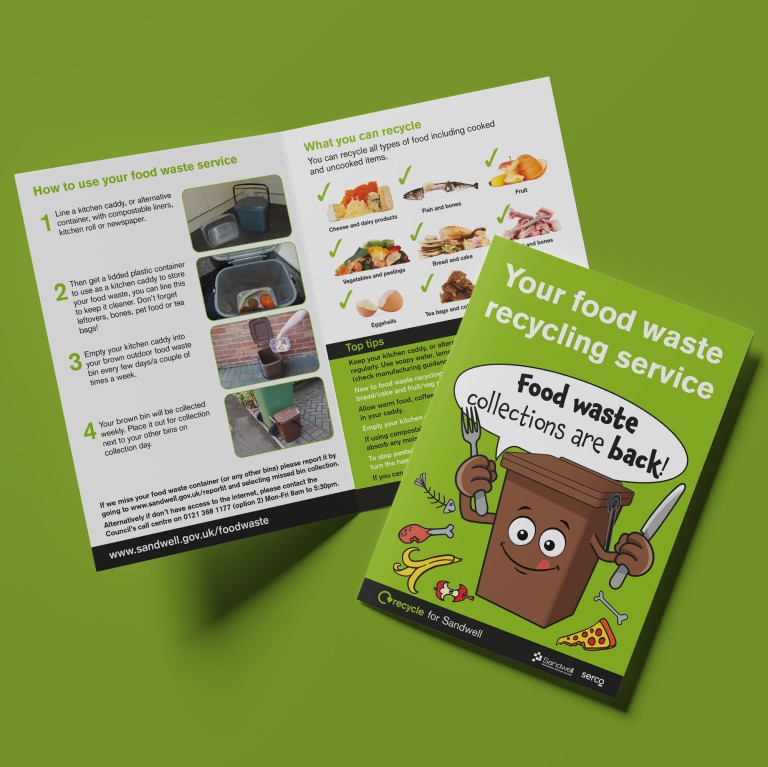
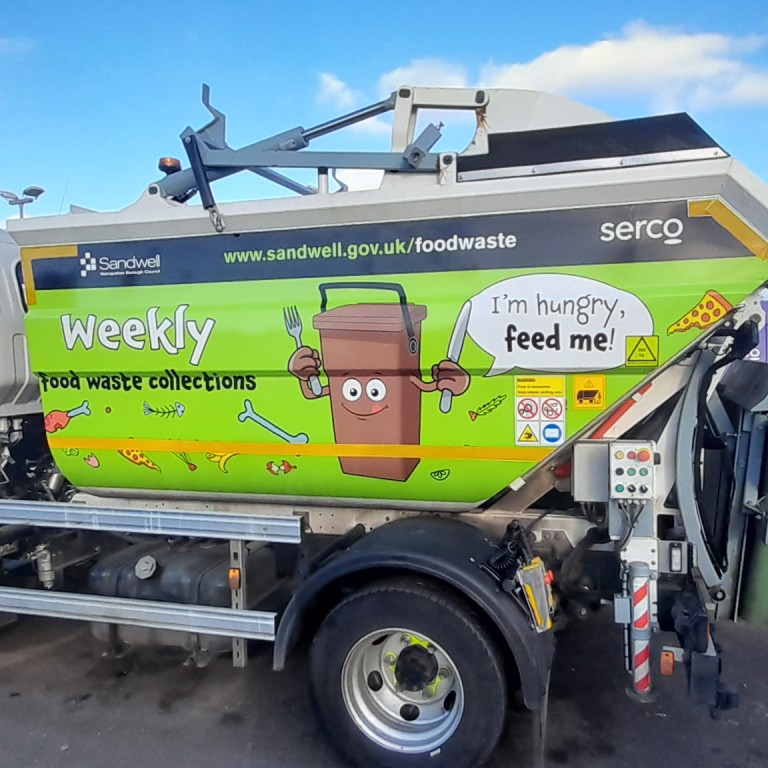
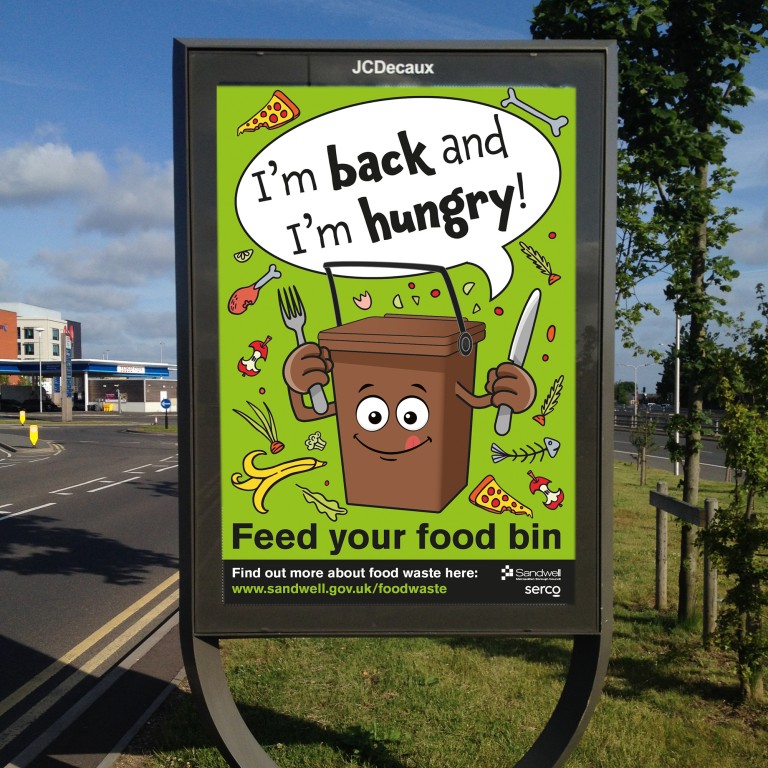
Food waste probably isn't the most glamorous subject we've ever worked on. But that doesn't mean the communication around it has to be dull. So we gave the new brown food caddy a personality. The little brown bin character became the face of the campaign, appearing across leaflets, social media, outdoor advertising and even on the collection vehicles themselves.
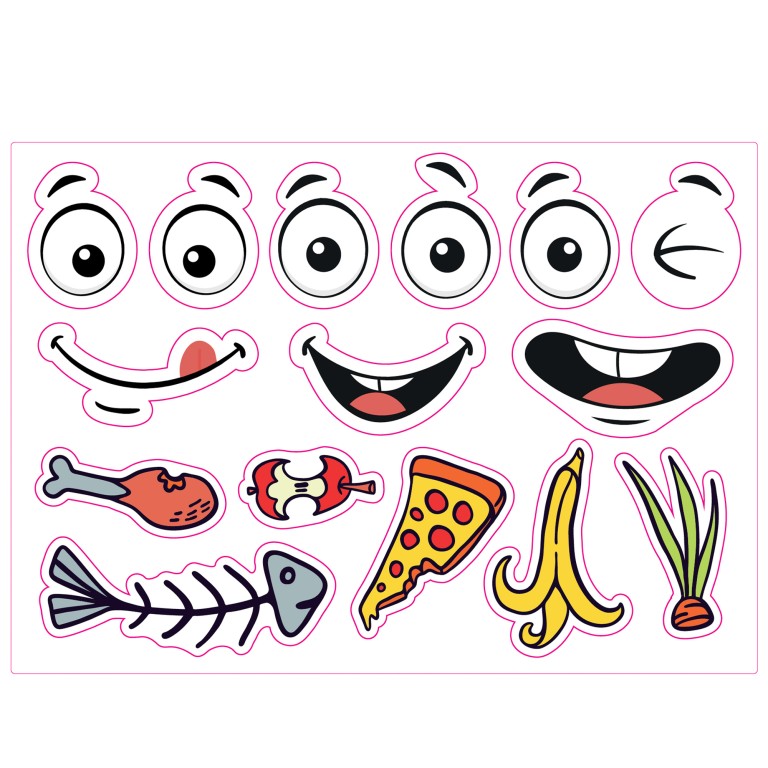
But one of my favourite parts of the campaign was much smaller. When the new food caddies were delivered to households, they came with sheets of cartoon eyes, mouths and bits of food that families could use to decorate their own caddy. It was a simple idea, designed particularly to get children involved and make this strange new little brown bin appearing in the kitchen feel less like another council instruction and more like something the family could engage with.
Sometimes changing behaviour starts with making something approachable.
From recycling food to wasting less of it
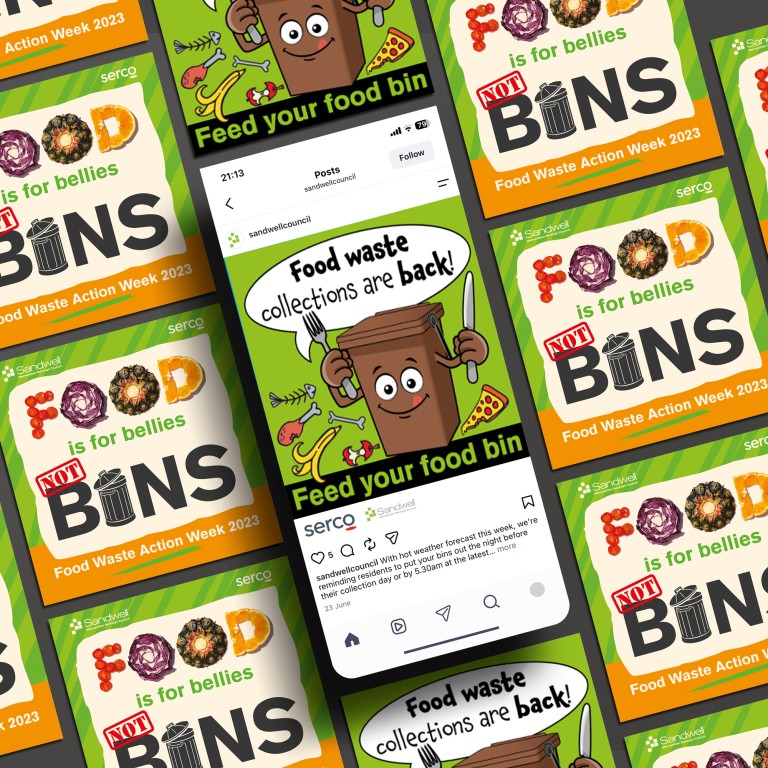
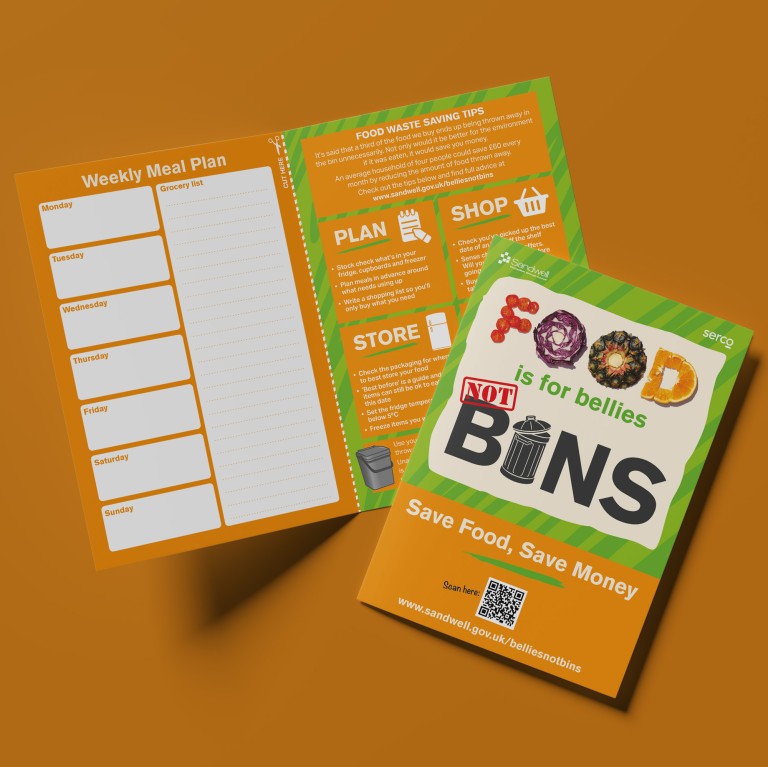
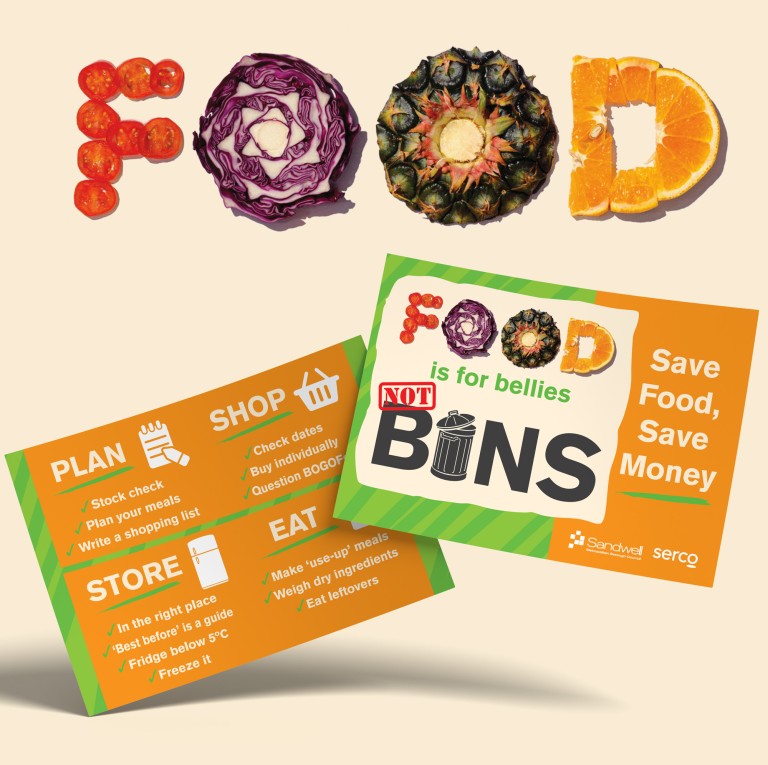
By 2023, the conversation had moved on. Food recycling was established, but there was another message to communicate: ideally, some of that food shouldn't be going into the caddy in the first place. Again working with the comms team, it led to the FOOD is for bellies NOT BINS campaign.
The campaign encouraged people to think about the food they bought and wasted, with practical advice around planning meals, shopping, storing food properly and using leftovers. And there was another important benefit. Waste less food and you save money.
We created the Save Food, Save Money material around that message, including a weekly meal planner and shopping list that people could actually use rather than simply another leaflet telling them what they ought to be doing. The creative approach had changed because the objective had changed.
In 2021 the council needed people to understand and participate in a new food recycling service.
By 2023 the council were also asking them to think about how much food became waste in the first place.
One campaign. Lots of places to say it.
Over the years the work has appeared on leaflets, postcards, social media, outdoor advertising, information materials and vehicles driving around Sandwell.
Each has a different job to do.
Someone passing a street poster has a few seconds to understand the message. A leaflet arriving through the door can explain the service in detail. Social media needs to stop a thumb. A meal planner needs to be useful enough to earn its place on the fridge. That's why a campaign isn't simply about designing one piece of artwork and resizing it six different ways. It's about understanding what somebody needs to see, know or do at each point — and designing accordingly.
And sometimes it's about giving them a sheet of cartoon eyeballs and letting them stick a ridiculous face on their food bin.
Whatever works!